-
Sub-Boreal Spruce
Back to Web Atlas
Sub-Boreal Spruce 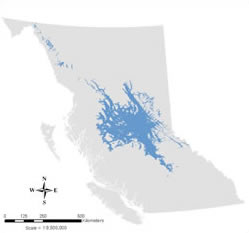
The Sub-Boreal Spruce zone is located in British Columbia's interior. It is known for its cold winters and warm summers, deep snow cover and variety of wildlife. Popular activities include fishing, hunting and cross country skiing. The Sub-Boreal Spruce zone also has a vast network of lakes and rivers.
Range
The sub-boreal spruce zone occupies the terrain of BC’s interior plateau; located in central British Columbia. It extends along the highlands of the Nechako and Quesnel plateaus and the Fraser Basin, with long forested sections into the valley bottoms of mountainous areas to the north, east, and west. Several major lakes and rivers are located in this zone, including the Skeena, Bulkley, Fraser, Babine, and Nechako, as well as lakes such as Stuart, Francois, Burns, Trembleur, and the Nation Lakes. In addition, the flat plateaus in this zone are dotted with a variety of glacial meltwater channels, kettle depressions, river oxbows, and lakes that harbour wetland ecosystems which include marshes, fens, and swamps.
Sub-Boreal Spruce Ranges

Climate
Because the Sub-Boreal Spruce zone is located in the interior, it has characteristic extremes of temperature. Short, warm and moist summers are combined with temperatures often reaching 30 degrees Celsius. Winters can reach temperatures of -10 degrees, with extremes sometimes at -40 degrees.
Vegetation
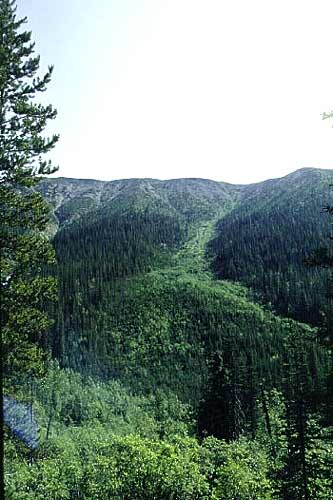
The vast rolling landscape of the Sub-Boreal Spruce zone is lushly covered in coniferous forest. The dominant coniferous species are hybrid white spruce, subalpine fir, and occasionally, black spruce, along with lodgepole pine and occasionally Douglas-fir. Underbrush include: lilies, ferns, blueberries, Devil’s club, black huckleberry, thimbleberry, highbush-cranberry, Sitka alder, velvet-leaved blueberry, black gooseberry, black twinberry, bunchberry, thimbleberry and Queen’s Cup.
Black Huckelberry Devil's Club Bush


Wildlife
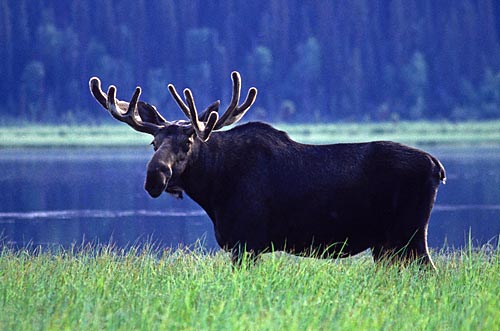
There is abundant foliage for wildlife to thrive in the Sub-Boreal Spruce zone. Wetlands also provide a good habitat for animals. Moose are the most common large mammal; well adapted to climatic conditions of this zone. Other mammals include grizzly bears, gray wolves, fisher, marten, and snowshoe hare. Bird species are also abundant; the Great Gray Owl, Great Horned Owl Pine Siskin, Pine Grosbeak, Pine Grosbeak, Red Crossbill, and Golden crowned Kinglet. Wetlands in this zone also provide a good habitat for many waterfowl. Because of the vast expanse or river systems existing, fish species are common, and include rainbow trout, steelhead, and salmon.
Great Horned Owl Bull Moose

Resources
The primary resource found in the Sub-Boreal Spruce Zone is lumber. There are large tracts of mature productive forest ready for harvest. Other resources include hunting and trapping, due to the presence of a variety of wildlife, particularly furbearing animals. There do exist a few areas with dairy and cattle operations, however this is limited to specific areas. Recreational activities such as hiking, camping, snowmobiling are also important resources. In addition, fishing is very popular, as nowhere else in the world has an intact river system of this zone.
Fly Fishing
